























-

Anonymous Speech on the Internet, in Amateur Media: Social, Cultural and Legal Perspectives (Dan Hunter et al. eds., 2013)
Brian C. Murchison
The U.S. legal community is engaged in a serious but inconclusive dialogue on issues relating to anonymous speech on the Internet. To be sure, several basic questions relevant to Internet speech have been settled: in a 1997 case; the Supreme Court determined that strict scrutiny applies to Internet content regulation, and in a 1995 case, the Court recognized a First Amendment right of anonymous speech. Yet the 1995 case did not arise in an Internet setting, and the scope of expressive freedom in certain Internet scenarios remains disputed. Over the past ten years, courts and commentators have grappled with anonymous blogging cases, proposing a spectrum of legal standards for pre-trial discovery of bloggers' identities. As experience accumulates, this legal doctrine should stabilize, and doctrine affecting related issues should emerge as well. This chapter argues that the stabilizing process will depend on clear analysis of the relevant First Amendment value. The truth-seeking value should guide the formulation of rules for anonymous Internet speech.
-

Rejecting Property Rules-Liability Rules for Boomer's Nuisance Remedy: The Last Tour You Need of Calabresi and Melamed's Cathedral, in Remedies and Property (Russell Weaver & François Lichère eds., 2013)
Doug Rendleman
The seventh Remedies Discussion Forum was held at the University of Aix-Marseille Faculty of Law, Aix, France, on June 20-21, 2012. The purpose of the forum was to bring together a small group of prominent remedies scholars to discuss matters of common interest. For 2012, there were two topics : "remedies as applied to property issues". Second, convergences and divergences between common law and civil law systems in the field of property." This book contains most of the papers Chat were presented during the Forum.
-
Child Soldiers, Transitional Justice, and the Architecture of Post Bellum Settlements, in Morality, Jus Post Bellum, and International Law (Larry May & Andrew Forcehimes eds., 2012)
Mark A. Drumbl
Worldwide, the number of children associated with armed forces or armed groups is very difficult to estimate. One routinely cited statistic evokes the two hundred and fifty thousand to three hundred thousand range. This statistic is dated, however, and was probably inaccurate to start with. In places where conflict ends, the number of child soldiers abates. In places where conflict begins, the number ramps up. And where conflict festers, the number persists. Suffice it to say that, at the least, tens of thousands of children under the age of eighteen currently are associated with armed forces or armed groups. A much larger number, recently demobilized, seek to rejoin civilian life. Going back home returns them to the communities where they initially had been recruited and, in some instances, where they had committed terrible atrocities. Over the past decade, jurisdictions such as Liberia, Sierra Leone, Colombia, and Uganda have faced the joys and challenges of widespread re integration of former child soldiers.
-
Reimagining Child Soldiers in International Law and Policy (2012)
Mark A. Drumbl
The international community's efforts to halt child soldiering have yielded some successes. But this pernicious practice persists. It may shift locally, but it endures globally. Preventative measures therefore remain inadequate. Former child soldiers experience challenges readjusting to civilian life. Reintegration is complex and eventful. The homecoming is only the beginning. Reconciliation within communities afflicted by violence committed by and against child soldiers is incomplete. Shortfalls linger on the restorative front. Still, conversations about child soldiers mostly involve the same story, told over and over, and repeat the same assumptions, over and over. Current humanitarian discourse sees child soldiers as passive victims, tools of war, vulnerable, psychologically devastated, and not responsible for their violent acts. This perception has come to suffuse international law and policy. Although reflecting much of the lives of child soldiers, this portrayal also omits critical aspects. This book pursues an alternate path by reimagining the child soldier. It approaches child soldiers with a more nuanced and less judgmental mind. It offers a way to think about child soldiers that would invigorate international law, policy, and best practices. Where does this reimagination lead? Not toward retributive criminal trials, but instead toward restorative forms of justice. Toward forgiveness instead of excuse, thereby facilitating reintegration and promoting social repair within afflicted communities. Toward a better understanding of child soldiering, without which the practice cannot be ended. This book also offers fresh thinking on related issues, ranging from juvenile justice, to humanitarian interventions, to the universality of human rights, to the role of law in responding to mass atrocity.
-
The Crime of Genocide, in Research Handbook on International Criminal Law (Bartram S. Brown ed., 2012)
Mark A. Drumbl
This carefully regarded and well-structured handbook covers the broad range of norms, practices, policies, processes and institutional mechanisms of international criminal law, exploring how they operate and continue to develop in a variety of contexts. Leading scholars in the field and experienced practitioners have brought together their expertise and perspectives in a clear and concise fashion to create an authoritative resource, which will be useful and accessible even to those without legal training.
-
Reforming the Third Year of Law School, in Reforming Legal Education: Law Schools at the Crossroads (David M. Moss & Debra Moss Curtis eds., 2012)
Lyman P.Q. Johnson, Robert T. Danforth, and David K. Millon
In today’s volatile law school environment, curriculum reform has emerged as a significant focus. It is commonly understood that law schools effectively teach certain analytical skills, but are less successful in other areas, and often scramble to adapt to evolving aims. This book demonstrates how law schools are successfully reforming their curriculum - and lays the framework to show how all schools of law can engage in a continuous reform model that proactively shapes our profession. It is expected that faculty and professional staff engaged in legal education will utilize this book as a primary resource to guide their respective reform efforts. Each contributed chapter presents a case study of a data-driven curriculum reform effort. The initial chapters set the conceptual context for the book, while the final chapter offers summative recommendations for considering legal education reform as derived from the earlier case study chapters. This book adds significantly to the literature in legal education, as we gain first hand insight into evidence based reform for the legal education community.
-
Procedural Justice, Collateral Consequences, and the Adjudication of Misdemeanors, in The Prosecutor in Transnational Perspective (Erik Luna & Marianne Wade eds., 2012)
John D. King
The American prosecutor plays a powerful role in the judicial system, wielding the authority to accept or decline a case, choose which crimes to allege, and decide the number of counts to charge. These choices, among others, are often made with little supervision or institutional oversight. This prosecutorial discretion has prompted scholars to look to the role of prosecutors in Europe for insight on how to reform the American system of justice. In The Prosecutor in Transnational Perspective, Erik Luna and Marianne Wade, through the works of their contributors coupled with their own analysis, demonstrate that valuable lessons can be learned from a transnational examination of prosecutorial authority. They examine both parallels and distinctions in the processes available to and decisions made by prosecutors in the United States and Europe. Ultimately, they demonstrate how the enhanced role of the prosecutor represents a crossroads for criminal justice with weighty legal and socio-economic consequences.
-
Class Actions and Other Multi-Party Litigation: Cases and Materials (3d ed. 2012)
Robert H. Klonoff, Edward K. Bilich, and Suzette M. Malveaux
Klonoff, Bilich and Malveaux’ Class Actions and Other Multiparty Litigation, Cases, and Materials focuses on one of the most important and dynamic areas of modern federal civil practice: aggregate-party litigation, particularly class actions. The book covers the latest groundbreaking Supreme Court cases involving employment discrimination, arbitration, and securities fraud. This casebook: Provides cutting-edge cases Explores litigation strategies used by practitioners Examines the theories underlying complex, multiparty litigation As such, this book is ideal for scholars, lawyers, and students.
-
The Constitutional Jurisprudence of the Federal Republic of Germany (3d ed. 2012)
Donald P. Kommers and Russell A. Miller
First published in 1989, The Constitutional Jurisprudence of the Federal Republic of Germany has become an invaluable resource for scholars and practitioners of comparative, international, and constitutional law, as well as of German and European politics. The third edition of this renowned English-language reference has now been fully updated and significantly expanded to incorporate both previously omitted topics and recent decisions of the German Federal Constitutional Court. As in previous editions, Donald P. Kommers and Russell A. Miller's discussions of key developments in German constitutional law are augmented by elegantly translated excerpts from more than one hundred German judicial decisions.
Compared to previous editions of The Constitutional Jurisprudence of the Federal Republic of Germany, this third edition more closely tracks Germany's Basic Law and, therefore, the systematic approach reflected in the most-respected German constitutional law commentaries. Entirely new chapters address the relationship between German law and European and international law; social and economic rights, including the property and occupational rights cases that have emerged from Reunification; jurisprudence related to issues of equality, particularly gender equality; and the tension between Germany's counterterrorism efforts and its constitutional guarantees of liberty. Kommers and Miller have also updated existing chapters to address recent decisions involving human rights, federalism, European integration, and religious liberty.
-
Prosecuting in the Military, in The Prosecutor in Transnational Perspective (Erik Luna & Marianne Wade eds., 2012)
Timothy C. MacDonnell
The American prosecutor plays a powerful role in the judicial system, wielding the authority to accept or decline a case, choose which crimes to allege, and decide the number of counts to charge. These choices, among others, are often made with little supervision or institutional oversight. This prosecutorial discretion has prompted scholars to look to the role of prosecutors in Europe for insight on how to reform the American system of justice. In The Prosecutor in Transnational Perspective, Erik Luna and Marianne Wade, through the works of their contributors coupled with their own analysis, demonstrate that valuable lessons can be learned from a transnational examination of prosecutorial authority. They examine both parallels and distinctions in the processes available to and decisions made by prosecutors in the United States and Europe. Ultimately, they demonstrate how the enhanced role of the prosecutor represents a crossroads for criminal justice with weighty legal and socio-economic consequences.
-
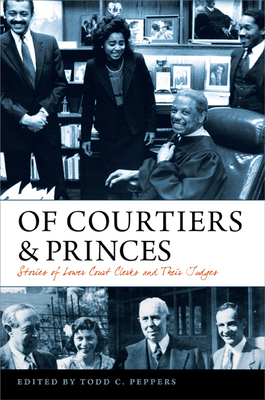
In Chambers: Stories of Supreme Court Law Clerks and Their Justices (Todd C. Peppers & Artemus Ward eds., 2012)
Todd C. Peppers
Written by former law clerks, legal scholars, biographers, historians, and political scientists, the essays in In Chambers tell the fascinating story of clerking at the Supreme Court. In addition to reflecting the personal experiences of the law clerks with their justices, the essays reveal how clerks are chosen, what tasks are assigned to them, and how the institution of clerking has evolved over time, from the first clerks in the late 1800s to the clerks of Justice Ruth Bader Ginsburg and Chief Justice William Rehnquist.
In Chambers offers a variety of perspectives on the unique experience of Supreme Court clerks. Former law clerks—including Alan M. Dershowitz, Charles A. Reich, and J. Harvie Wilkinson III—write about their own clerkships, painting vivid and detailed pictures of their relationships with the justices, while other authors write about the various clerkships for a single justice, putting a justice's practice into a broader context. The book also includes essays about the first African American and first woman to hold clerkships. Sharing their insights, anecdotes, and experiences in a clear, accessible style, the contributors provide readers with a rare glimpse into the inner workings of the Supreme Court.
-
Women’s Rights, Customary Law and the Promise of the Protocol on the Rights of Women in Africa, in The Future of African Customary Law (Jeanmarie Fenrich et al. eds., 2011)
Johanna E. Bond
Customary laws and traditional institutions in Africa constitute comprehensive legal systems that regulate the entire spectrum of activities from birth to death. Once the sole source of law, customary rules now exist in the context of pluralist legal systems with competing bodies of domestic constitutional law, statutory law, common law, and international human rights treaties. The Future of African Customary Law is intended to promote discussion and understanding of customary law and to explore its continued relevance in sub-Saharan Africa. This volume considers the characteristics of customary law and efforts to ascertain and codify customary law, and how this body of law differs in content, form, and status from legislation and common law. It also addresses a number of substantive areas of customary law including the role and power of traditional authorities; customary criminal law; customary land tenure, property rights, and intestate succession; and the relationship between customary law, human rights, and gender equality.
-

The Probate Estate: Planning and Adminsitration, in The ABA Practical Guide to Estate Planning (Jay A. Soled ed., 2011)
Robert T. Danforth
The ABA Practical Guide to Estate Planning will help guide clients to an effective estate plan to fit their needs. For both the novice and experienced estate planning practitioner, this practical guide offers sound advice from leading estate planners around the country who share their knowledge and expertise so that you don't miss a step in the process.
-
Collective Responsibility and Postconflict Justice, in Accountability for Collective Wrongdoing (Tracy Isaacs & Richard Vernon eds., 2011)
Mark A. Drumbl
How best to secure justice in the aftermath of mass atrocity? International criminal tribunals – and courtrooms and jailhouses generally – have emerged as influential accountability mechanisms. Yet the justice pursued by international criminal tribunals, although tangible, also is strikingly under-inclusive. These limitations suggest that adequately redressing collective violence might contemplate a discursive shift to inclusively incorporating other accountability mechanisms, including collective forms of responsibility. Collective responsibility implies non-criminal sanctions that attach to groups whose misfeasance or nonfeasance is supportive of, acquiescent in, causally connected to, or necessary for serious violations of international criminal law to occur. This paper examines what collective responsibility mechanisms might look like; what ends they might serve; what dangers they pose; and how they might contribute to a more robust instantiation of post-conflict justice.
-
Policy Through Complementarity: The Atrocity Trial as Justice, in The International Criminal Court and Complementarity: From Theory to Practice (Carsten Stahn & Mohamed M. El Zeidy eds., 2011)
Mark A. Drumbl
This chapter examines the macro-architectural effects of complementarity upon the content, imagination, narrative and meaning of inter- and post-conflict transitional justice. The complementarity doctrine privileges the liberal criminal trial and its concomitant, sequestered incarceration, over other justice mechanisms. Accordingly, complementarity may encourage heterogeneity in terms of the number of institutions adjudicating international crimes, but it encourages homogeneity in terms of the process they follow and the nature of the punishment they mete out. Complementarity embeds the iconic status of the courtroom and the jailhouse as the best practice to promote justice in the aftermath of mass violence. This conceptualization of justice, rooted as it is in select individual guilt, serves important accountability goals. However, it may square poorly with the collective nature of atrocity and even clash with the expectations of local populations; moreover, it also protects state, organizational, corporate and bystander interests, while privileging the craft of the international criminal lawyer. In response, the author suggests that power relationships in international criminal law be revisited, both vertically and horizontally. More immediately, he urges a gentle and flexible interpretive understanding of complementarity – a light touch, so to speak.
-
Skills & Values: Federal Income Taxation (2011)
Michelle Lyon Drumbl and Deborah S. Kearns
Each chapter in Skills & Values: Federal Income Taxation addresses a specific topic covered in most introductory Tax law school courses. The chapters begin with an introduction to help bridge the gap between the actual practice of law and the doctrine and theory studied in class. Students will then have the opportunity to engage in active, "hands on" learning by working through a stand-alone exercise that simulates a real-life legal dilemma. The exercises are as authentic as possible, incorporating materials such as IRS forms, schedules, and publications; wage and income transcripts; deficiency notices; correspondence; judicial opinions; statutes; and revenue rulings. The self-assessment tools suggests ways that a practicing attorney might have approached each exercise. It is not meant to provide "the answer," but to identify issues and strategies students should have considered in order to effectively represent a client.
-
Practice Before the IRS and Professional Responsibility in Tax Practice, in Effectively Representing Your Client Before the IRS (T. Keith Fogg ed., 5th ed. 2011)
Michelle Lyon Drumbl and Jennifer Mueller
Published by the American Bar Association Section of Taxation and now in its 5th Edition, this bestselling title is a comprehensive collection of everything a tax professional needs to know when dealing with the IRS. Written by some of the most experienced tax controversy lawyers in the United States, it not only provides an in-depth discussion of the law, but is replete with realistic examples and hundreds of practice tips to aid practitioners in all stages of representation before the IRS in controversy matters, including exam, appeals, Tax Court, refund actions, collection matters, and more. The two-volume reference also includes a companion CD-ROM and particularly timely new material on resolving identity theft matters, assisting military clients, and assisting victims of disasters.
-

Estate and Gift Taxation (2011)
Brant J. Hellwig and Robert T. Danforth
This first edition of Estate and Gift Taxation, a new addition to the LexisNexis Graduate Tax Series, fully incorporates the new exemption levels, marginal rates, and unified credit portability rules in the Tax Relief, Unemployment Insurance Reauthorization, and Job Creation Act of 2010. The book contains 26 discrete chapters, each containing a concise overview of the topic with specific assignments to the Internal Revenue Code and Regulations. Each chapter closes with a series of complex, practice-oriented problems that require students to spot and resolve issues in the context of realistic hypotheticals that could be encountered in an estate planning practice.
-
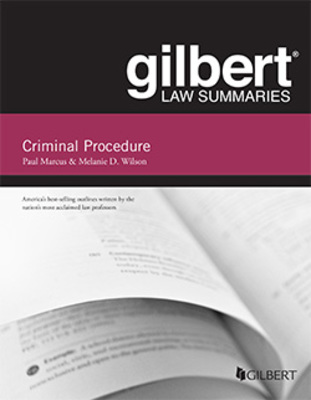
Gilbert Law Summaries: Criminal Procedure (18th ed. 2011)
Paul Marcus and Melanie D. Wilson
The topics covered in this criminal procedure outline are the exclusionary rule, arrests and other detentions, search and seizure, privilege against self-incrimination, confessions, and preliminary hearing. Discusses bail, indictment, speedy trial, competency to stand trial, government's obligation to disclose information, right to jury trial, and right to counsel. Also includes right to confront witnesses, burden of proof, insanity, entrapment, guilty pleas, sentencing, death penalty, ex post facto issues, appeal, habeas corpus, juvenile offenders, prisoners' rights, and double jeopardy.
-
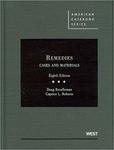
Remedies: Cases and Materials (8th ed. 2011)
Doug Rendleman and Caprice L. Roberts
Remedies 8th Edition teaches students how to traverse the complex territory of choice and measurement of plaintiffs' remedies. Accessible and readable decisions build on upper-level students' first-year courses in contracts, torts, property, constitutional law, and civil procedure. The text is organized to teach students how to choose and measure damages, injunctions, and restitution. It emphasizes the lawyer's tactics in addition to the court's decisions. It examines law and economics in selecting between tort and contract remedies.
-
Actors and Law-Making in International Environmental Law, in Research Handbook on International Environmental Law (Malgosia Fitzmaurice et al. eds, 2010)
Mark A. Drumbl
This wide-ranging and comprehensive Handbook examines recent developments in international environmental law (IEL) and the crossover effects of this expansion on other areas of international law, such as trade law and the law of the sea.
The expert contributors offer analyses of foundational issues in IEL, such as responsibility for environmental damage, sustainable development and the precautionary principle, alongside studies in topical subject areas including marine protection and the law of international watercourses. This Research Handbook offers an in-depth analysis of IEL, both as a field of law in its own right, and as part of the wider system of international law. It gives a comprehensive view of IEL in all its forms and complexity.
With thorough examination of specific environmental regimes and compliance mechanisms, this Handbook will be an indispensable resource for legal scholars, students and practitioners alike. -
Child Soldiers: Agency, Enlistment, and the Collectivization of Innocence, in Collective Violence and International Criminal Justice: An Interdisciplinary Approach (Alette Smeulers ed., 2010)
Mark A. Drumbl
Extreme forms of collective violence such as genocide, crimes against humanity and war crimes can endanger international peace and security. The international criminal justice system has been set up in order to prosecute these crimes and to thus restore international peace and security. These crimes are however extremely complex social phenomena and it takes an inter- and multidisciplinary approach to understand the true nature of this type of criminality and to effectively prosecute the perpetrators thereof. This book enhances our knowledge of these complex phenomena and thus contributes to a better and more effective system of international criminal justice. Scholars from many different scientific disciplines such as law, criminology, political science, psychology, research methodology and information technology as well as practitioners from within the field have contributed to this book.
General themes in the book are: What kind of people are perpetrators of collective violence? How can we attribute criminal responsibility to individuals for crimes which are collective in nature? How can we study these crimes and how can we discover patterns of violence? What role can statistics play when holding individuals accountable? How to develop strategies of prosecution? What difficulties do prosecutors and judges face and how important and useful is the ICC Case Matrix? These are just a few of the many questions addressed in this book.
-

Rwanda, in The Oxford International Encyclopedia of Peace (Nigel J. Young ed., 2010)
Mark A. Drumbl
Tensions between the Hutu and Tutsi ethnic groups have existed throughout Rwandan history. On numerous occasions these tensions induced violence, although the amplitude of the 1994 violence was unprecedented. Ethnic tensions were exacerbated by colonial interventions, in particular those effected by the Belgians. The Belgian colonial administrators took a liking to the Tutsi people. They treated them preferentially, angering the majority Hutu people. In 1933, the Belgian colonial administration passed a law requiring every Rwandan to carry an ethnic identity card. The lines between Tutsi and Hutu groups, which traditionally had been porous and informal, suddenly became permanent and legalized. The ethnic identity card requirement persisted after Rwandan independence in 1960. Tragically, the continued presence of this requirement accelerated the genocide, insofar as persons unable to produce a Hutu card simply were slaughtered. Accordingly, genocide in Rwanda can, to some degree, be traced to colonial policies that exacerbated ethnic conflict.
-
A Plea to Reject the United States Supreme Court's Due-Process Review of Punitive Damages, in The Law of Remedies: New Directions in the Common Law (Jeff Berryman & Rick Bigwood eds., 2010)
Doug Rendleman
This volume of essays is the end product of the Second International Symposium on the Law of Remedies, a joint undertaking of the Faculties of Law at the Universities of Windsor, Canada, and Auckland (Research Centre for Business Law), New Zealand. The symposium brought together scholars drawn from four continents, representing the major Commonwealth common law jurisdictions, as well as the United States and Ireland.
Collectively, the essays illustrate the breadth and depth of attention that is now accorded to the study of remedies throughout the common law world. The collection also demonstrates the value of fruitful exchanges across common law jurisdictions that have much to gain from learning of one another's experiences, thereby enriching the body of knowledge for a system that is inherently built upon discrete and incremental case law.
-
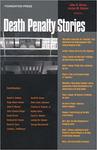
Simmons v. South Carolina (1994), in Death Penalty Stories (John Blume & Jordan Steiker eds., 2009)
David I. Bruck
Blume and Steiker's Death Penalty Stories offers rich and detailed accounts of the most important capital cases in American law. This volume provides comprehensive examination of the canonical cases, as well as coverage of core issues such as: Representation, Protections for the innocent, Proportionality limits, Execution methods, The problem of volunteers, and The guarantee of heightened reliability.
The Books and Chapters collection highlights published scholarship by members of the faculty at the Washington and Lee University School of Law. The record for each item includes a description of the work, publication information, and a link to purchase or download the text. The works are authored by current and former faculty members and arranged by year of publication and then alphabetically by author's last name, with the most recent at the beginning of the list.
Printing is not supported at the primary Gallery Thumbnail page. Please first navigate to a specific Image before printing.